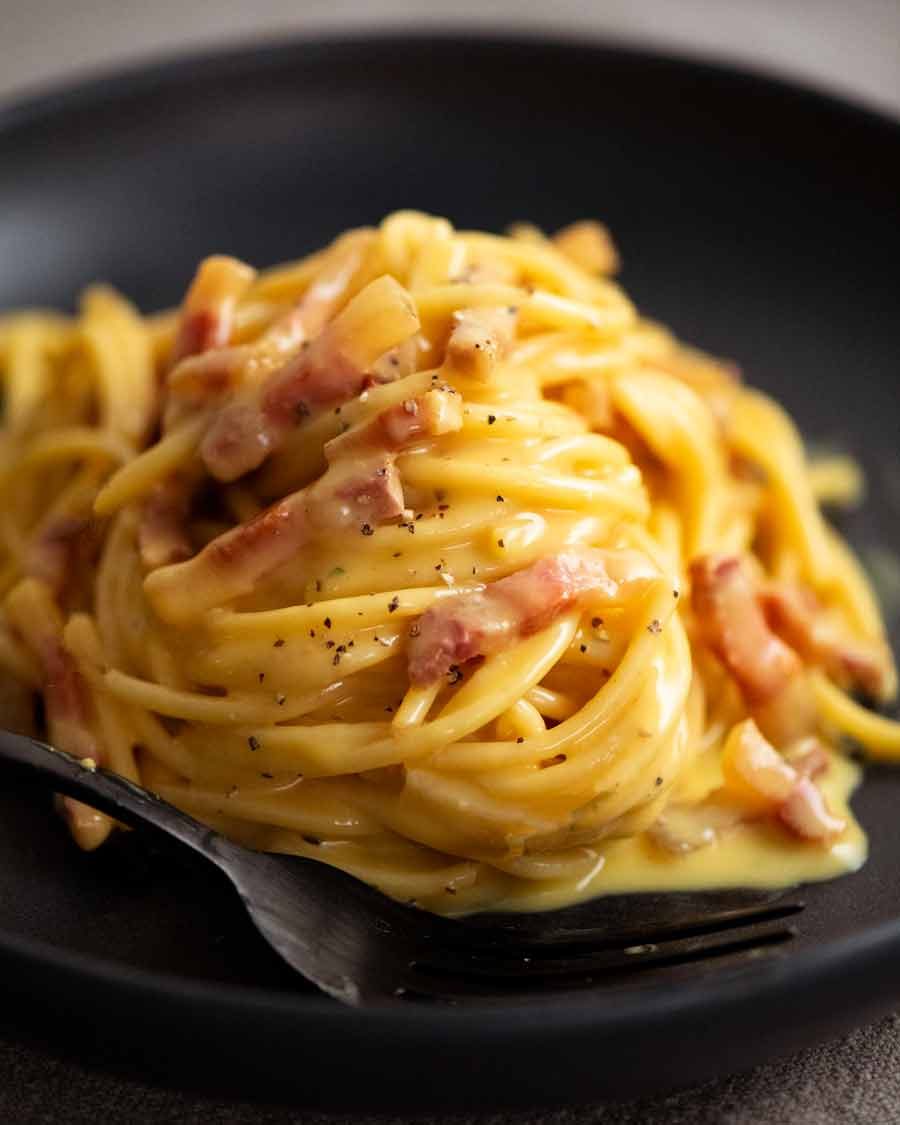
Authentic Carbonara: The Cream-Free Roman Secret with Guanciale
In the vibrant tapestry of Italian cuisine, few dishes command as much reverence and provoke as much discussion as Carbonara. It's more than just a pasta dish; it's a testament to Roman ingenuity, a symphony of humble ingredients transformed into something extraordinary. Yet, for all its fame, the true essence of an authentic Carbonara recipe is often misunderstood, particularly concerning its legendary creaminess. Let's set the record straight: a true Roman Carbonara is completely cream-free, relying instead on a masterful interplay of eggs, cheese, cured pork, and pasta water to achieve its iconic velvety texture.
Forget everything you thought you knew about 'creamy' pasta sauces. The secret to this beloved Roman dish lies not in a dairy product, but in a precise technique that coaxes a rich, emulsified sauce from just four core ingredients. This isn't a dish that dates back to ancient Rome; its history is surprisingly modern, yet no less captivating. It’s a story born of necessity, elevated by culinary genius, and celebrated worldwide.
The Unlikely Birth of a Roman Classic
Unlike many Italian classics whose histories stretch back centuries, the Carbonara recipe is a relative newcomer, barely a century old. Its origins are steeped in the challenging aftermath of World War II. Italy, weary and resource-scarce, found an unexpected culinary muse in the provisions brought by American soldiers stationed in Rome. These rations often included powdered eggs and bacon — ingredients that, to the resourceful Romans, represented potential.
What began as a simple, comforting meal — perhaps a quick scramble of pasta with bacon and eggs — quickly evolved. The powdered eggs were discarded in favor of fresh, vibrant yolks. The American bacon was respectfully replaced with a superior, deeply flavorful cured pork cheek known as guanciale. And the processed cheese? It gave way to the pungent, salty delight of Pecorino Romano, a sheep's milk cheese deeply rooted in central Italian culinary tradition. Finally, a generous hand with freshly cracked black pepper was added, not just for seasoning, but for a noticeable kick that became a signature element. For a deeper dive into this fascinating journey, read about Carbonara's Humble Roots: From Wartime Rations to Iconic Pasta.
The resulting dish was so satisfying and reminiscent of the hearty fare once enjoyed by the "carbonari" (charcoal workers) that it was fittingly named Pasta alla Carbonara. From humble wartime rations, Roman ingenuity crafted an international icon, proving, as Chef Massimo Bottura elegantly put it, that "Carbonara is the perfect example of how simplicity can be deeply satisfying."
Decoding the Pillars of True Carbonara: The Essential Ingredients
The beauty of an authentic Carbonara recipe lies in its minimalist approach. There are no fancy tricks or hidden components — just four foundational ingredients that, when treated with respect, create a dish of unparalleled depth and richness. Understanding each one is key to unlocking the true Roman secret.
Guanciale: The Soul of the Dish
This is where many home cooks first stumble. Guanciale (pronounced gwan-CHAH-leh) is not just any cured pork; it's the undisputed king of authentic Carbonara. Made from pork jowl, it's cured with salt, pepper, and sometimes herbs, then aged. Its fat has a higher melting point and a more nuanced, porky flavor than pancetta or bacon. When rendered slowly, it produces crispy bits of intense flavor and a beautiful, translucent fat that forms the base of the sauce. Using bacon or pancetta might yield a tasty dish, but it won't be authentic Carbonara; the flavor profile and texture of the rendered fat are simply different.
Pecorino Romano: The Salty Heart
This hard, salty sheep's milk cheese is non-negotiable. Its sharp, tangy, and intensely savory profile is fundamental to the character of Roman Carbonara. While Parmesan (Parmigiano Reggiano) is a wonderful cheese, it offers a milder, nuttier flavor that simply can't replicate the punch of Pecorino Romano. For the purest flavor, grate it fresh just before use.
Eggs: The Cream-Maker (Without Cream!)
Here's the real magic — and the biggest differentiator. Authentic Carbonara achieves its luscious, creamy texture through a simple emulsion of raw egg yolks (often with one or two whole eggs for a richer texture, but primarily yolks), grated Pecorino Romano, and a splash of starchy pasta water. When tossed with hot pasta off the heat, the residual warmth gently cooks the eggs into a silky sauce, rather than scrambling them. This technique is what gives Carbonara its distinctive, velvety coating without a single drop of cream.
Black Pepper: The Fiery Finish
More than just a seasoning, black pepper is a vital component. Freshly cracked black pepper, often in generous quantities, provides a fragrant warmth and a subtle, peppery bite that cuts through the richness of the guanciale and cheese. It's not uncommon to see a Roman cook grinding pepper directly into the pan or over the finished dish with gusto; it's an essential flavor note.
Choosing the Right Pasta
While often associated with spaghetti, Carbonara is equally delicious with other sturdy pasta shapes that can hold the rich sauce, such as rigatoni, bucatini, or fettuccine. The key is to cook the pasta al dente — firm to the bite — in well-salted boiling water. The starch released into the cooking water is crucial for creating the creamy emulsion.
Mastering the Art: A Step-by-Step Carbonara Recipe
Crafting the perfect, authentic Carbonara is a dance of timing and technique. It requires confidence, speed, and a deep understanding of its core principles. Remember, the goal is a velvety sauce, not scrambled eggs!
Prep Your Ingredients
- Bring a large pot of water to a rolling boil. Add a generous amount of salt — it should taste like the sea.
- Cut 150-200g of guanciale into small lardons or cubes (about 1/4 inch thick).
- In a mixing bowl, whisk together 3-4 fresh egg yolks (and optionally 1 whole egg) with about 80-100g of freshly grated Pecorino Romano. Add a generous amount of freshly cracked black pepper. Set aside. This mixture will be thick.
- Cook 300-400g of your chosen pasta (e.g., spaghetti, rigatoni) according to package directions until al dente. Before draining, reserve at least 1-2 cups of the starchy pasta cooking water.
Render the Guanciale
- While the pasta cooks, place the guanciale in a cold, dry pan over medium-low heat. Slowly render the fat, allowing the guanciale to become beautifully crisp and golden, not burnt. This process can take 8-10 minutes. The fat should be translucent and shimmering.
- Once crisp, remove the guanciale pieces from the pan with a slotted spoon and set aside on a paper towel, leaving the rendered fat in the pan. Turn off the heat under the pan — this is crucial.
Craft the Emulsion
- When the pasta is ready, use tongs to transfer it directly into the pan with the rendered guanciale fat (the heat should still be off, or very low if you need a tiny bit of warmth to keep the pan warm, but avoid high heat). This ensures some of the hot pasta water clings to the strands.
- Quickly add a ladleful (about 1/4 cup) of the hot, starchy pasta water to the egg and cheese mixture, whisking vigorously. This tempers the eggs and helps create the emulsion.
Combine and Conquer
- Pour the tempered egg and cheese mixture over the pasta in the pan. Working quickly and continuously, toss the pasta vigorously with tongs, incorporating the sauce. Add more reserved pasta water, a tablespoon at a time, as needed to achieve a smooth, creamy, and glossy sauce that coats every strand. The residual heat from the pasta and the pan will gently cook the eggs without scrambling them.
- Stir in most of the crispy guanciale pieces.
Serve Immediately
Serve your authentic Carbonara immediately, garnished with the remaining crispy guanciale, extra grated Pecorino Romano, and a final flourish of freshly cracked black pepper. Each forkful should be a testament to simplicity and perfect execution.
While some popular modern adaptations introduce cream for a richer sauce, the true Roman secret lies in creating an emulsion purely from eggs, cheese, and pasta water. For those interested in exploring a different, indulgent approach, you can find a guide to making a Creamy Carbonara Perfection: Your 25-Minute Indulgent Pasta Guide.
Beyond the Plate: Why Authentic Carbonara Endures
The endurance of the authentic Carbonara recipe is a powerful reminder that the most satisfying culinary experiences often stem from the fewest, finest ingredients handled with respect and technique. It's a dish that teaches patience, the importance of sourcing, and the art of emulsion. From rustic trattorias in Rome to elegant dining tables around the globe, Carbonara continues to captivate diners with its profound flavor and luxurious texture — all achieved without a drop of cream.
It's this elegant simplicity, coupled with a rich (though recent) history, that makes Roman Carbonara more than just a meal. It's a culinary journey, an invitation to experience the heart of Italian cooking, and a challenge to embrace the beauty of letting good ingredients speak for themselves. Embrace the guanciale, master the emulsion, and discover the true, cream-free secret to one of the world's most beloved pasta dishes.